Published on
Reading Time
5 mins
Author
Share this article
Brand archetypes have been a staple of brand strategy for years now, but are they actually as useful as people like to believe? Or are they, as a growing number of respected voices have suggested, a bunch of pseudoscientific twaddle? Here's my take, and it hasn't changed.
I once shared a post on LinkedIn from marketing professor Mark Ritson, in which he described brand archetypes as "total bollocks but incredibly prevalent," placing them second on his All-Time Marketing BS Index. My own comment was not much softer. I called them "esoteric nonsense that only fulfils the ego of the facilitator."
Unsurprisingly, some so-called experts were quick to message me defending brand archetypes as a "valuable tool." Valuable to whom, I wondered. And the closer you look at the foundations, the worse it gets.
The pseudoscience problem
Proponents lean on psychology to justify archetype usage. Jung. Freud. The collective unconscious. It sounds credible. But this is where the whole thing falls apart.
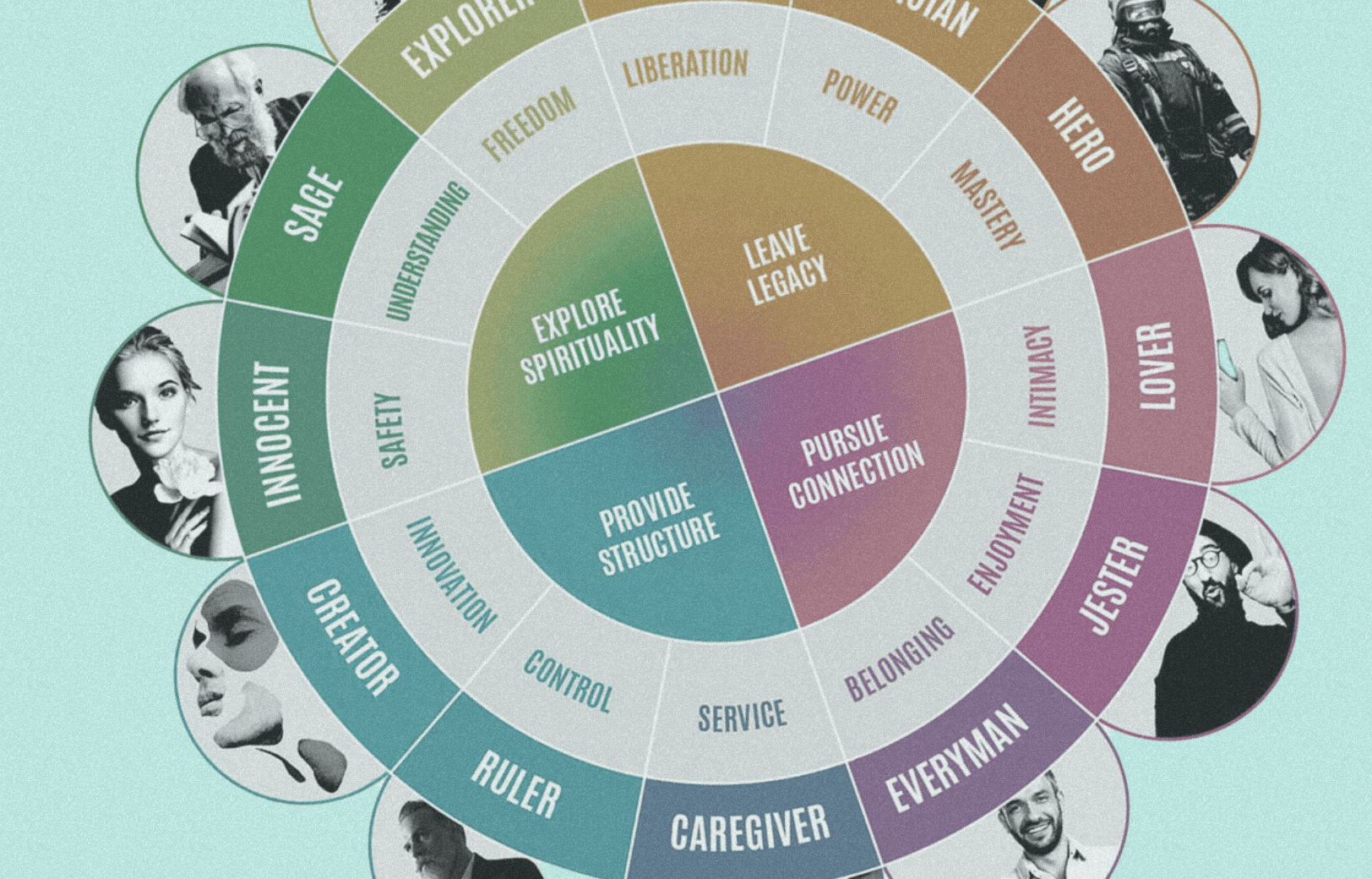
Yes, Carl Jung created the concept of archetypes. But he did not create the 12 brand archetypes used in marketing. Those were invented in the book "The Hero and the Outlaw" in 2001 by Margaret Mark and Carol S. Pearson. It's a marketing idea developed by two authors, not a validated psychological framework.
Jung never even proposed a fixed number of archetypes. He insisted there are "as many archetypes as there are typical situations in life." The 12-archetype model has about as much connection to Jungian psychology as astrology has to astronomy.
And modern psychology hasn't been kind to Jung's original theory either. As Simply Psychology summarises it, Ernest Jones, Freud's biographer, said Jung "descended into a pseudo-philosophy out of which he never emerged." The academic consensus is that archetypal concepts are too vague and subjective to test scientifically and don't meet contemporary research standards. We're not dealing with validated science here. We're dealing with marketing dressed up as science.
Claiming scientific legitimacy because you reference Jungian theory is like claiming a diet is medically proven because it mentions vitamins.
Strong brands don't actually do this
Here's something that should give archetype believers real pause. A 2022 study published in Business Horizons analysed more than 2,400 brands and found that strong brands consistently leverage multiple archetypes simultaneously, not just one as the framework prescribes.
Which means the very brands held up as proof that archetypes work, Apple, Nike, Harley-Davidson, are actually doing the opposite of what the model tells you to do. They succeed because they're multidimensional, not because they picked a box and stayed in it.
And consider Harley-Davidson, the classic Rebel. Does every piece of communication need to scream rebellion? Are brands no longer allowed nuance? Humans certainly are.
The sameness trap
Brand archetypes claim to offer clarity. More often, they create confusion. They're vague enough to be interpreted differently by different people, yet rigid enough to box a brand into a narrow set of behaviours. They create the illusion of differentiation, but within a category, everyone ends up choosing the same archetype.
Healthcare? Most brands land on Caregiver or Sage. CVS Health, Johnson & Johnson, Mayo Clinic. Not exactly distinctive.
B2B is just as bad. I've seen competing consultancies in the same sector all land on Sage in the same year. Each one convinced they'd found their unique positioning. Each one now describing themselves as "trusted guides" who "illuminate the path forward." Swap the logos and you couldn't tell them apart.
Archetypes lean into what the company wants to be, rather than what the customer needs it to be. That misalignment creates brand expression that feels contrived, forced, or out of touch. To quote Marty Neumeier: "A brand is not what you say it is. It's what they say it is."
When archetypes replace customer understanding
A growing trend is using archetypes not just for brand personality, but for customer personality too. This is where it gets properly dangerous.
Imagine a mid-size travel company. The team decides they are the Explorer archetype. Fair enough. Then someone suggests their customers are Explorers too.
Suddenly, marketing speaks to rugged solo travellers, promoting remote escapes and wild challenges. But the actual customer base? Middle-aged professionals booking curated tours in Tuscany. They want reassurance, comfort, and expertise. Not adventure metaphors.
I've seen the same in B2B. A technology consultancy decides its clients are "Heroes on a transformation journey." All the messaging becomes about bravery and bold moves. Meanwhile the actual buyers, the CIOs and procurement leads, want evidence, risk mitigation, and proof you've done it before. The archetype flatters the client's self-image while completely ignoring their buying behaviour.
Not just my opinion
The chorus has grown considerably. Byron Sharp has dismissed archetypes as ignoring the real drivers of consumer behaviour. Tom Goodwin has compared them to astrology. Helen Edwards has argued that brands are inherently multidimensional and forcing them into fixed archetypes diminishes their richness. Ritson's point remains the sharpest: "The most fundamental understanding of brand is that it is the opposite of a generic system. The idea that you're one of twelve things runs against every principle of brand."
Even Jung himself warned against exactly this kind of misuse. In "The Archetypes and The Collective Unconscious" he wrote:
"Those who do not realise the special feeling tone of the archetype end with nothing more than a jumble of mythological concepts, which can be strung together to show that everything means anything or nothing at all."
Exactly.
What to do instead
Look outward. Your customers should shape your brand expression, not a mythological character.
Understand their beliefs, behaviour, frustrations and aspirations. Customer insight and sociographic profiling consistently outperform archetype thinking because they are rooted in reality, not metaphor. Then look at your competitive landscape. Understand where others play. Identify spaces they ignore. Real differentiation lives in the gaps, not in a pre-assigned archetype that three of your competitors have also chosen.
Businesses deserve better than shortcuts dressed as strategy.
And perhaps this is just me. I am a bit of an Outlaw after all.