Brand architecture
I deliver clarity and cohesion to fragmented brand portfolios, creating an architecture that strengthens your market position and aligns your organisation.
Who it's for
Groups built by acquisition, holding a set of brands that have never been asked to work as one.
Businesses where a thin marketing budget is spread across too many names to move any of them.
Leadership deciding whether the group needs a parent brand, and if so, which brand has earned it.
Owners preparing for investment or exit who need the portfolio to read as a business, not a collection of businesses.
What it solves
Six ways the wrong structure holds a brand portfolio back
When the brand arhitecture no longer supports the business, the cost is commercial, not cosmetic.
01
Marketing that can't build equity
Fund every brand as its own name and each launch pays full price for awareness from a standing start. Under the right structure a new offer borrows the trust the group has already earned, so spend compounds instead of resetting every time.
02
Brands competing instead of cross-selling
Without clear boundaries, two of your own brands chase the same buyer while the links that would let one sell the other go unbuilt. Architecture draws the lines: who each brand is for, and where they hand a customer on rather than collide.
03
A portfolio the market can't navigate
When the relationship between brands isn't legible, buyers can't tell what you do, where to look or how the offers differ. The structure makes the ecosystem readable, so a customer of one brand understands what else the group is for.
04
Premium equity watered down
Stretch one name across a luxury offer and a budget one and the top of the range loses the exclusivity it charges for. The right model keeps tiers apart, so each reaches its market without paying for the compromise of the other.
05
Every acquisition reopening the same question
Buy a business and the same argument starts again: keep the name, absorb it, endorse it. A defined architecture is the playbook that answers it in advance, so integration follows a rule instead of a debate.
06
A group the market struggles to value
When the parent holds no equity of its own, investors and acquirers see a holding company rather than a brand. The right structure decides what the group itself stands for, which is what a raise or an exit rewards.
What it is
Brand architecture is the system that governs how a portfolio holds together: how your brands are ranked, what each is responsible for, how they relate to one another and to the group above them, and how a name, an acquisition or a launch is placed within it.
It sets the hierarchy, which brands lead and which sit beneath and the role each one plays: what it owns, who it serves, where it stops. It governs how the group relates to its brands, whether it stands out front and lends them its name or stays behind and lets them run on their own. It sets the logic that everything downstream inherits, how new offers are named, how a purchase is absorbed, how a finite marketing budget is shared across the portfolio.
The models
Every portfolio sits somewhere across four models, whether it was chosen or arrived at
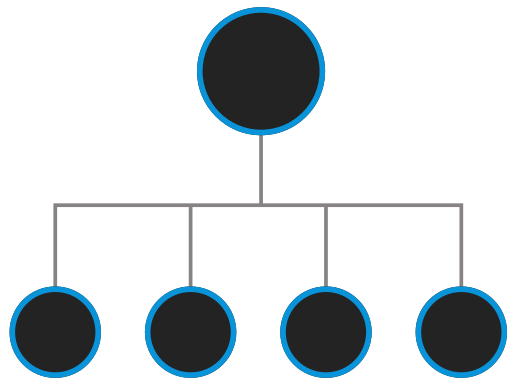
Branded House
One master brand stretches across everything, and each offer borrows its name and its equity. Equity compounds fastest here because every product feeds one reputation, though that reputation is shared, for better and for worse.
Example:
Google — Maps, Drive, Photos.
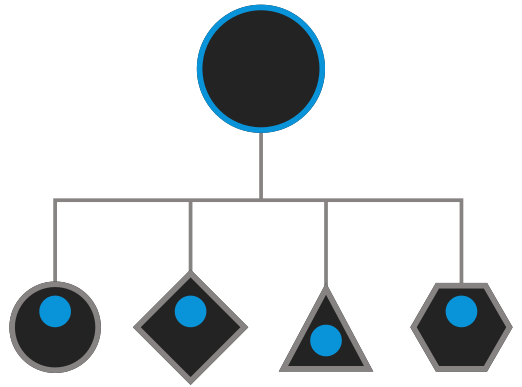
Endorsed
Distinct brands keep their own identity, visibly backed by a trusted parent. Trust transfers from the group without collapsing separate offers into a single name.
Example:
Virgin — Atlantic, Radio, Money.
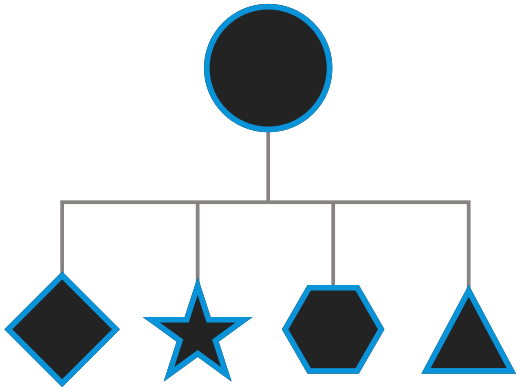
House of Brands
Independent brands stand alone, with the parent invisible behind them. Maximum freedom to serve very different markets and protect a premium name from a budget one, at the cost of building equity in each brand separately and compounding it in none.
Example:
P&G — Tide, Gillette, Pampers.
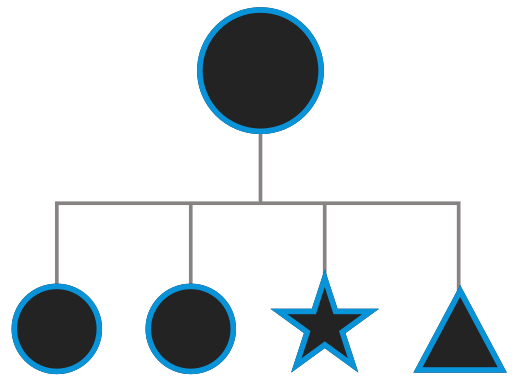
Hybrid
A mix, some offers unified under the master brand, others run independently. Where a single model would force the wrong call on part of the portfolio, a hybrid lets each part sit where it belongs.
Example:
Amazon — Whole Foods, Twitch, Audible.
Most portfolios drift across all three as they grow, until the structure owes more to history than to strategy. The work is choosing the model that fits where the business is heading and moving the portfolio onto it.
What you leave with
A brand portfolio audit scoring every brand on market value, overlap and strategic role
A recommended architecture model, with the rationale and the risks named
A parent brand recommendation backed by evidence, where the structure needs one
A brand relationship map showing what each name owns and where the boundaries sit
Marketing investment logic, so budget follows the structure instead of habit
A naming and governance framework for future launches and acquisitions
A migration path where the current portfolio needs to move
Questions?
Do you decide which brand becomes the parent?
–
Where the structure needs one, yes. The recommendation is built on how the market and search actually value each brand, not on internal familiarity, so it holds up with investors and future acquirers as well as the board.
Does this include naming new brands?
+
Do you handle the identity and design work afterward?
+
How long does it take?
+
We have several brands but no group identity. Is that a problem?
+